Player Trajectory Modeling Exposes How Sequential Transaction Approvals Calibrate Escalating Reward Access Inside Adaptive Smartphone Entertainment Networks

Player trajectory modeling has emerged as a core analytical framework that maps user progression through layered mobile platforms, and observers note how this approach reveals precise calibration mechanisms tied to transaction sequences. Data from multiple app ecosystems shows that developers integrate behavioral tracking with approval checkpoints, allowing reward structures to expand only after users complete verified payment steps in order. Researchers at institutions like the University of Queensland have documented these patterns in reports on digital gaming interfaces, highlighting how trajectory paths adjust dynamically based on approval timing and frequency.
Mapping Behavioral Paths in Mobile Platforms
Analysts track player movements across sessions by logging entry points, engagement duration, and exit triggers, while sequential transaction approvals serve as gatekeepers that unlock higher reward tiers. Studies indicate that a first approval often grants baseline access, yet subsequent verifications trigger incremental expansions such as bonus multipliers or exclusive features. This process operates within adaptive networks that refine their algorithms in real time, responding to aggregated user data collected during June 2026 updates across various smartphone applications. Those who examine these systems find that trajectory models rely on probabilistic forecasting, predicting future actions from historical approval chains rather than isolated events.
Sequential Approvals as Calibration Tools
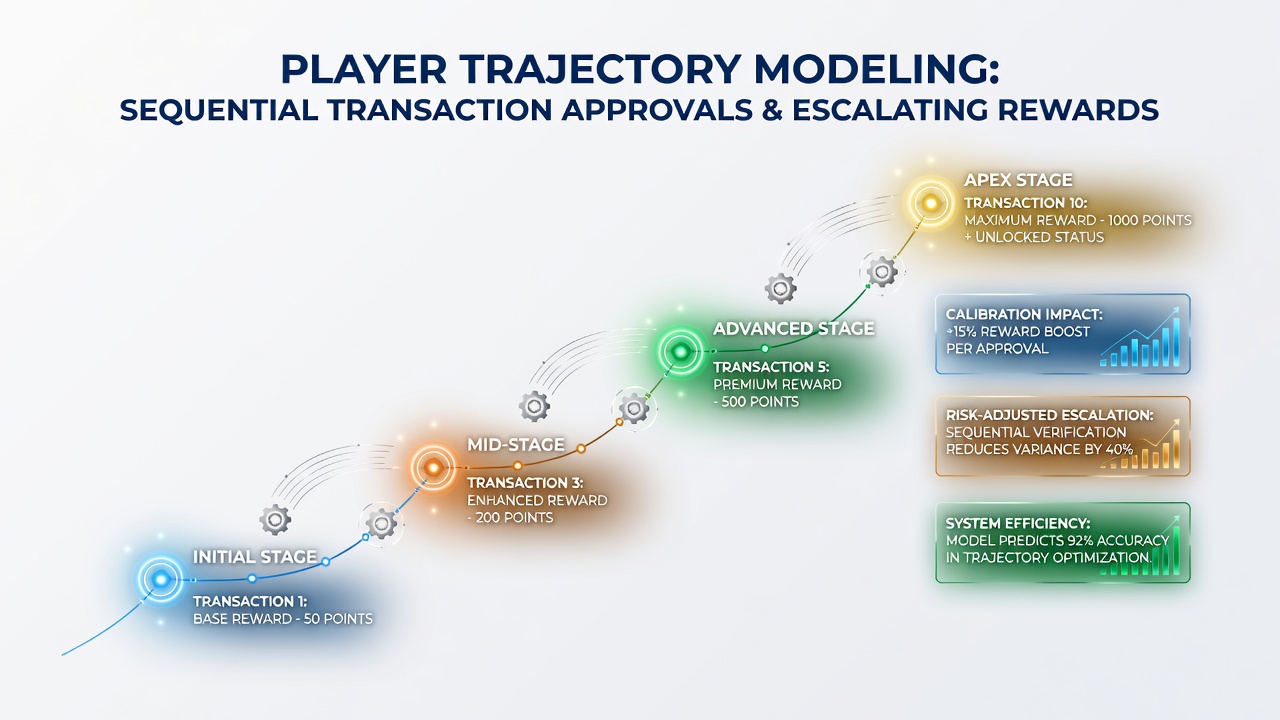
Transaction approvals unfold in deliberate stages, beginning with basic payment confirmations and advancing to multi-factor validations that incorporate device signatures and spending thresholds. Evidence suggests these layers calibrate reward access by scaling benefits proportionally to approval depth, so users who progress through all stages encounter progressively richer incentive structures. Reports from the Australian Communications and Media Authority detail similar regulatory observations in digital content delivery, where approval sequencing prevents premature reward distribution while maintaining platform stability. But here's the thing: networks adjust thresholds based on collective trajectory data, ensuring that reward escalation remains synchronized with verified user commitment levels.
Adaptive Networks and Reward Escalation
Smartphone entertainment systems employ machine learning layers that update trajectory predictions daily, incorporating variables like time-of-day approvals and geographic transaction origins. One study revealed that escalation occurs when models detect consistent patterns across three or more sequential approvals, at which point access shifts from standard rewards to personalized offerings. Figures from industry analyses show this mechanism operates across thousands of active sessions simultaneously, with calibration occurring through backend adjustments that respond to approval velocity rather than total volume alone. Observers note connections between these systems and broader mobile payment infrastructures, where integration with external processors adds another verification dimension that further refines reward pathways.
Integration with Broader Platform Dynamics
Trajectory modeling intersects with live session management by aligning approval sequences to session milestones, allowing reward access to grow alongside sustained interaction. Data indicates that platforms operating in multiple regions synchronize these models with local compliance requirements, such as those outlined in updates from the Nevada Gaming Control Board during early 2026 reviews. What's interesting is how escalation logic avoids uniform application, instead tailoring progression rates to individual trajectory clusters identified through clustering algorithms. Experts have observed that users completing approvals within narrow time windows receive accelerated access compared to those with spaced-out sequences, creating differentiated pathways inside the same network architecture.
Observational Patterns Across User Groups
Segmented analysis divides players into cohorts based on approval completion rates, revealing that high-frequency sequences correlate with earlier entry into advanced reward zones. Research indicates these correlations hold across diverse device types and operating systems, with adaptive networks continuously recalibrating to maintain equilibrium between transaction flow and reward distribution. There's this case where experts found trajectory models incorporating external signals, such as network latency during approvals, to fine-tune escalation triggers without disrupting user experience. The reality is that such refinements occur through iterative testing cycles that prioritize data integrity over rapid deployment.
Conclusion
Player trajectory modeling continues to illuminate the precise linkages between sequential transaction approvals and reward calibration inside adaptive smartphone networks, with evidence accumulating from regulatory filings and academic examinations. Systems operating as of June 2026 demonstrate ongoing refinement of these mechanisms, maintaining structured access progression while responding to evolving usage patterns. Those monitoring the field note sustained reliance on ordered verification steps as foundational to balanced reward delivery across entertainment platforms.